
ZOWIE didn’t unveil a new product in Budapest. It explained why its esports hardware is built for players, not trends— and why restraint remains central to its design philosophy.
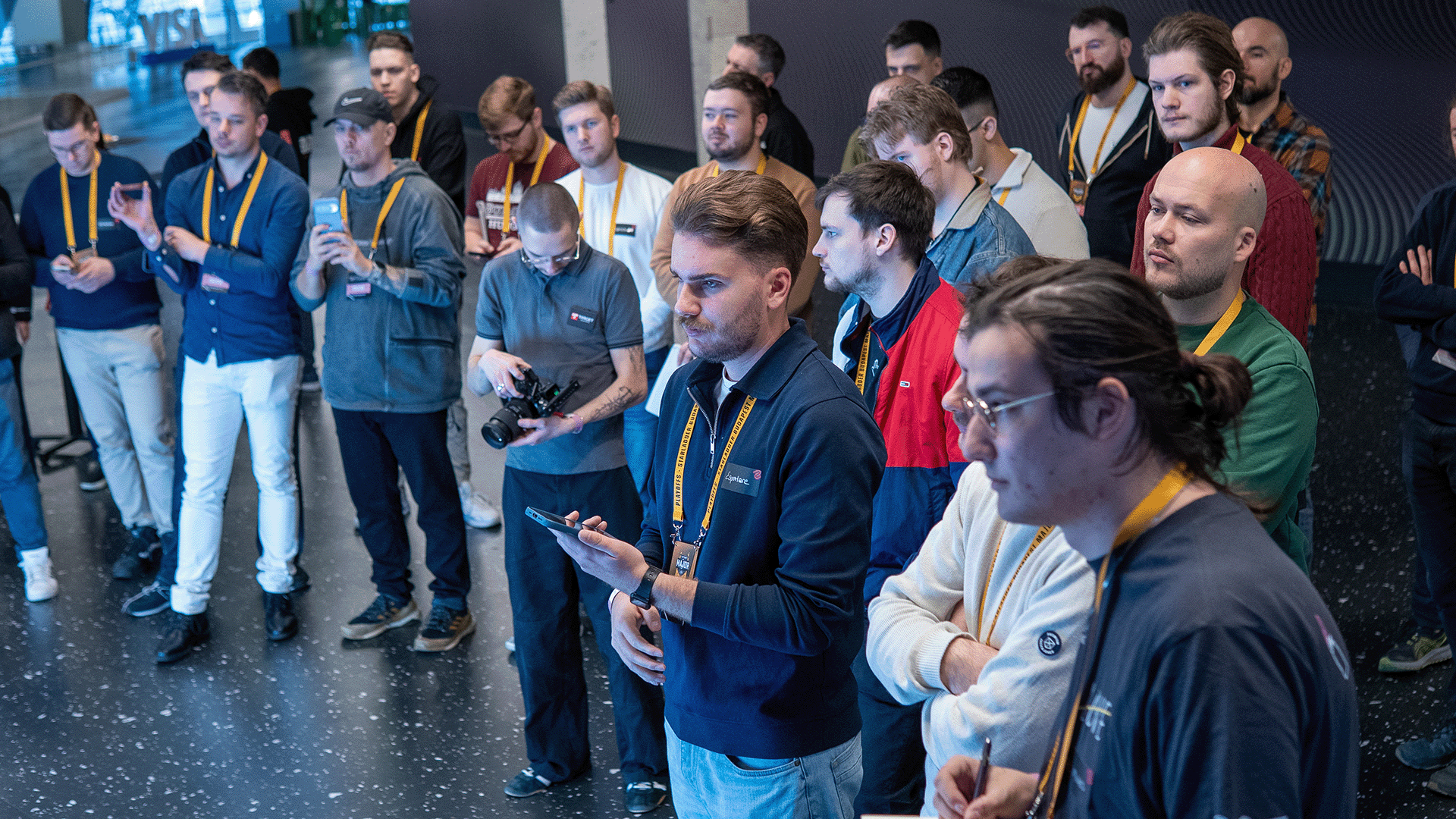
When 30 journalists arrived for the ZOWIE Media Tour inside the MVM Dome at the Starladder CS2 Budapest Major, many expected a familiar routine: a new product, a new spec sheet, a release date. None of that happened.
Instead, ZOWIE used the event to explain its design philosophy, and why it continues to resist the industry’s obsession with constant iteration and flashy features.
For the uninitiated, BenQ’s ties to Counter-Strike and Europe run deep. Both were part of a flagship marketing initiative over 15 years ago, which helped establish the framework for the company’s esports hardware and peripheral design philosophy.
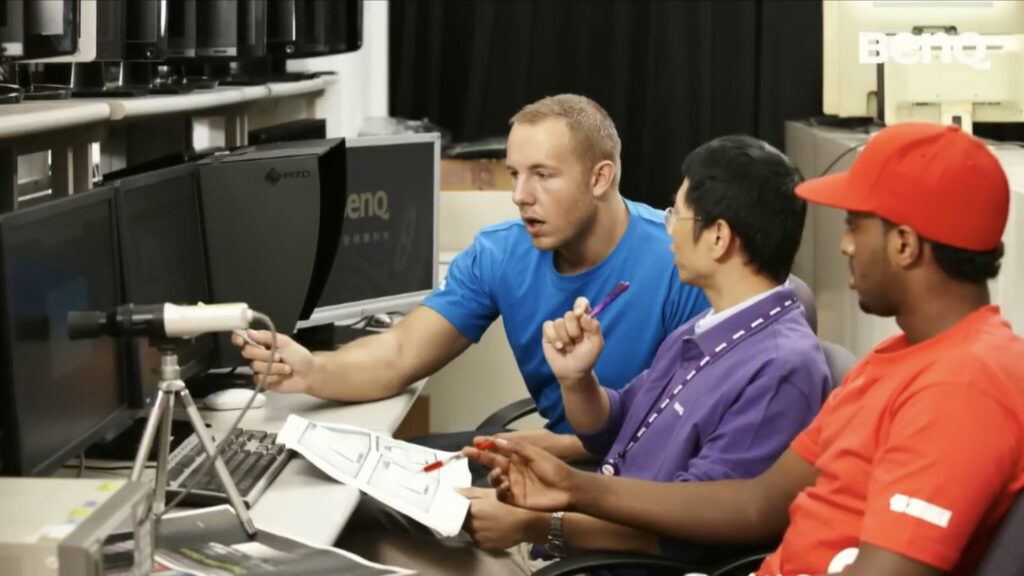
The initiative involved two CS 1.6 icons of the era, Emil “HeatoN” Christensen and Abdisamad “SpawN” Mohamed. Back in 2010, LCD screens struggled with clarity, and BenQ enlisted the help of the two professional players to build an LCD monitor fit for competitive gaming.
At the time, esports was still firmly in the CRT era, and professional players were reluctant to switch to LCD screens that felt slower and less precise.
The duo became foundational figures in BENQ’s transition from CRT-to-LCD. Yet, in her address, BenQ’s Director of Esports Business Celsa Wu referred to them as collaborators, not marketing partners.
One critical new LCD feature that came from the duo’s involvement was Black Equalizer, which allowed Counter-Strike players to see enemies more clearly in dark areas — a smart solution to the impractical gamma-boosting workaround.
Tweaks made for competitive advantage through professional player feedback became the blueprint for BenQ’s approach to esports hardware – an approach that now lives on through ZOWIE, which the company acquired in 2015. Since 2015, other new tech has been developed with pros in mind, such as Dynamic Accuracy (DyAc). DyAc reduces motion blur, improving recoil control and enemy tracking.
Jay Wu, President of BenQ Europe, set the tone early in the presentation, framing ZOWIE’s approach as one built through collaboration with professional players.
This message was later sharpened by Celsa Wu, who distilled the company’s philosophy into a single line.
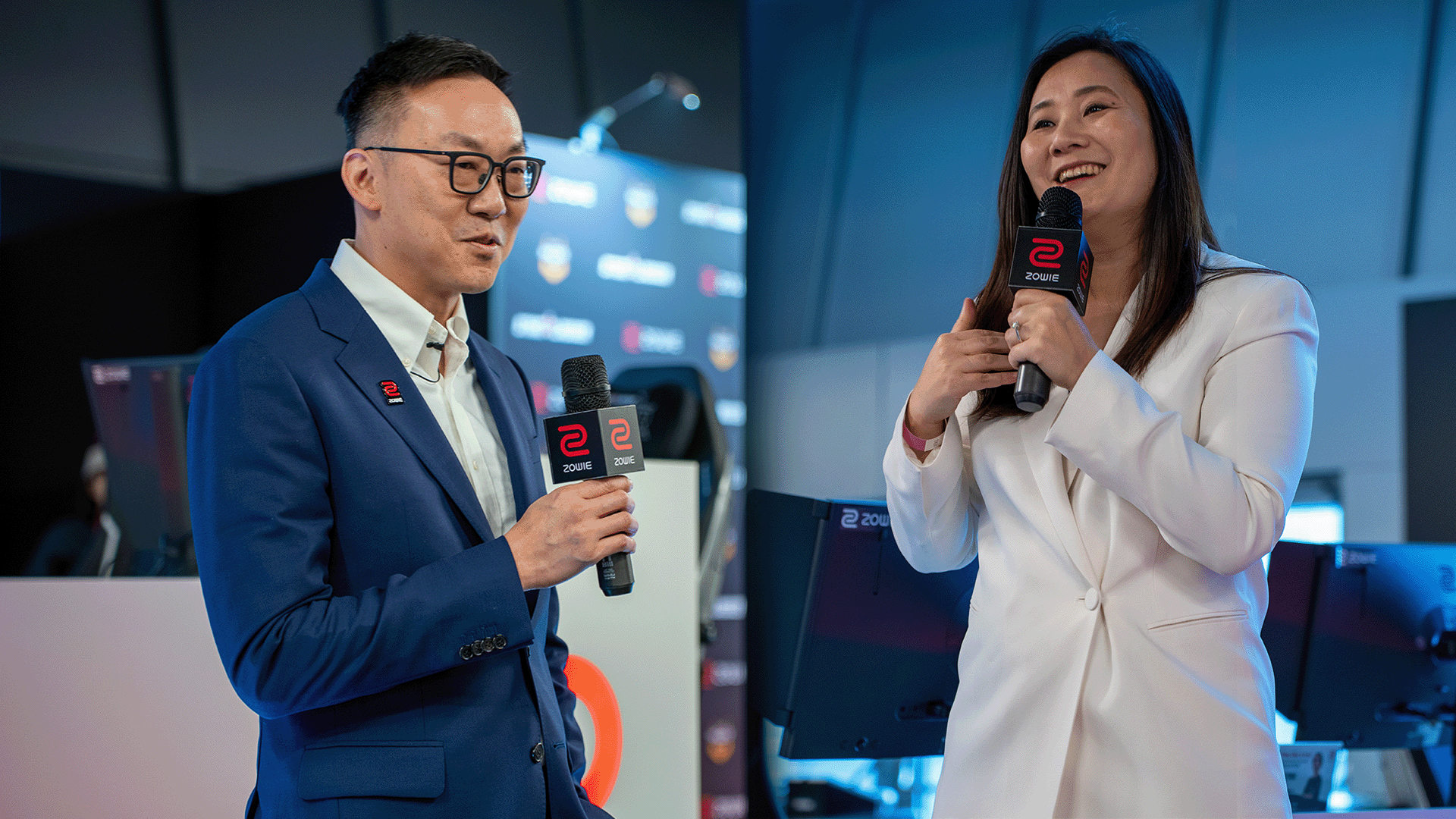
“Designed for Players, Not for Trends”
“What makes ZOWIE different is simple. We design for players, not for trends,” said Celsa Wu, BenQ’s Director of Esports Business.
This particular statement hit the hardest in the ZOWIE Media Tour at the Budapest Major, and for good reason. It is a clear mission statement that dictates the company’s entire approach to their product line. One that has not changed for 15 years.
“What makes ZOWIE different is simple. We design for players, not for trends.”
Celsa Wu, BenQ Europe’s Director of Esports Business
“We make sure whatever feature is added to ZOWIE products is helpful,” said Celsa Wu. “That’s why you don’t see eye-catching RGB lights on our products, because we don’t think that will help people’s in-game performance.”
Zowie has built its reputation by treating hardware as equipment, not decoration.
Monitors as Competitive Tools
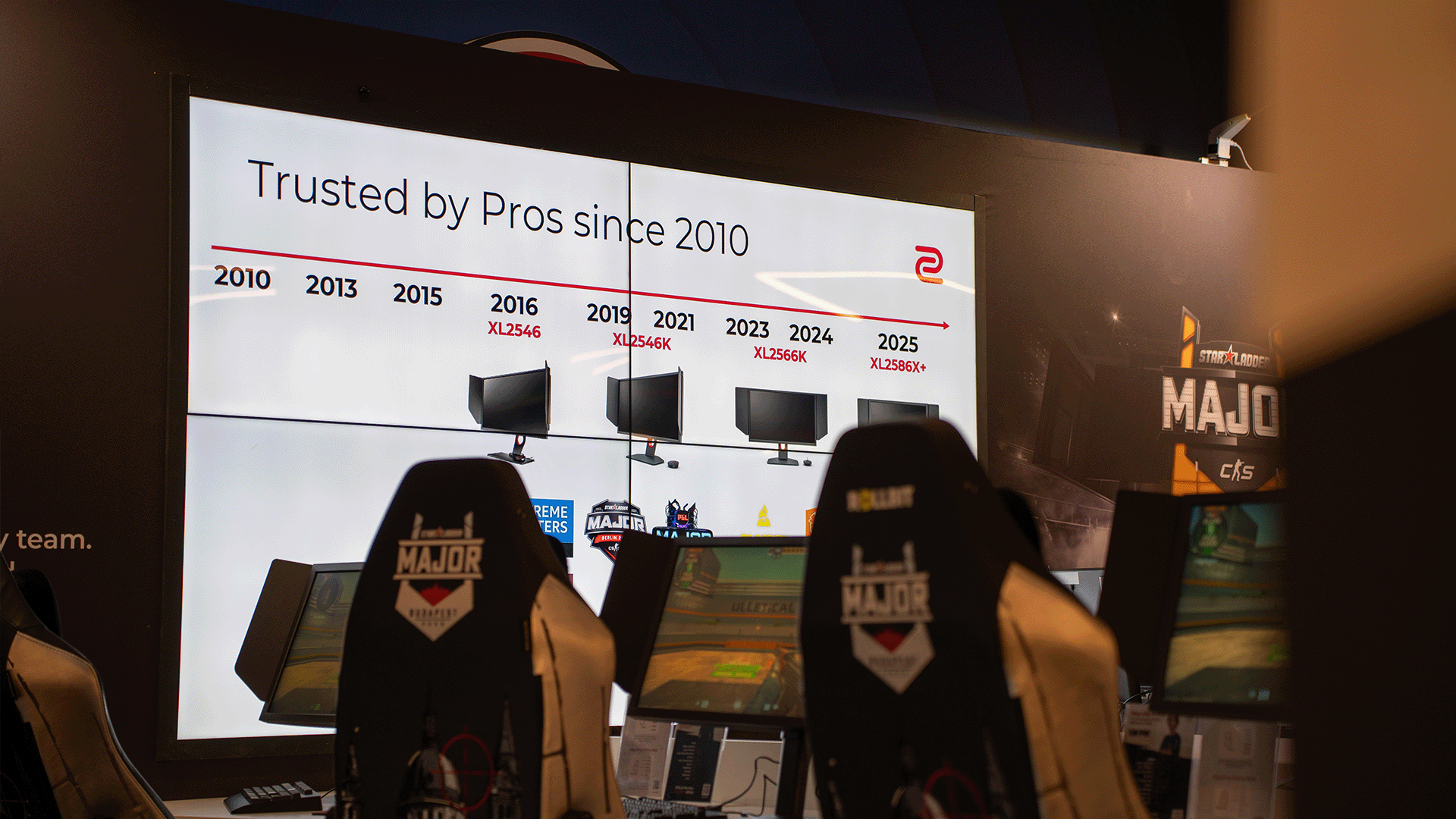
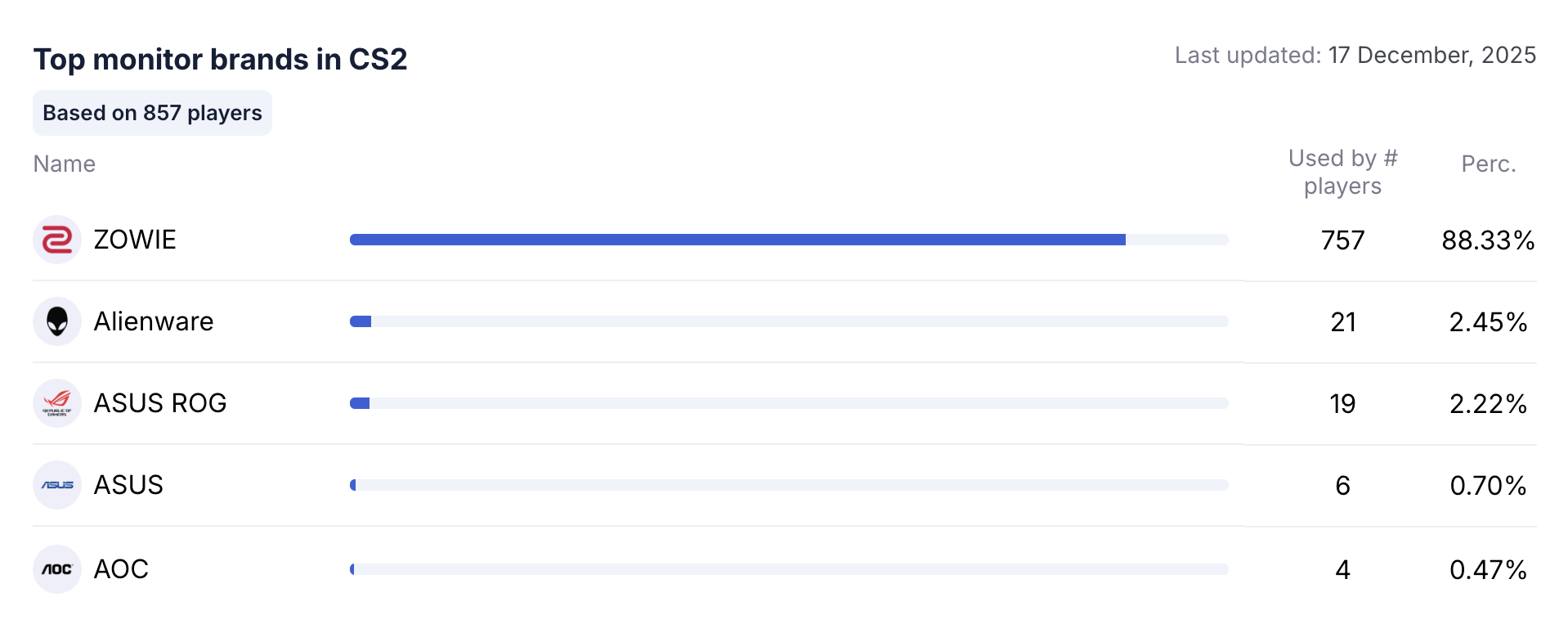
ZOWIE’s monitors in comparison to others on the market might look chunky, but remain a go-to favourite for Counter-Strike professionals and tournament organizers. Based on ProSettings, over 88% of professional CS2 players use ZOWIE monitors, with the ZOWIE XL2566K and XL2546K making up 55% of that market share.
From an aesthetic standpoint, ZOWIE monitors may not appeal to everyone, but given ZOWIE’s key goal is functionality over appearance, it starts to make sense why.
The design of ZOWIE monitors is based almost exclusively on pro player feedback.
The base of the monitor was reduced over time to allow more space for player hardware such as mouse, keyboard and mouse mat.
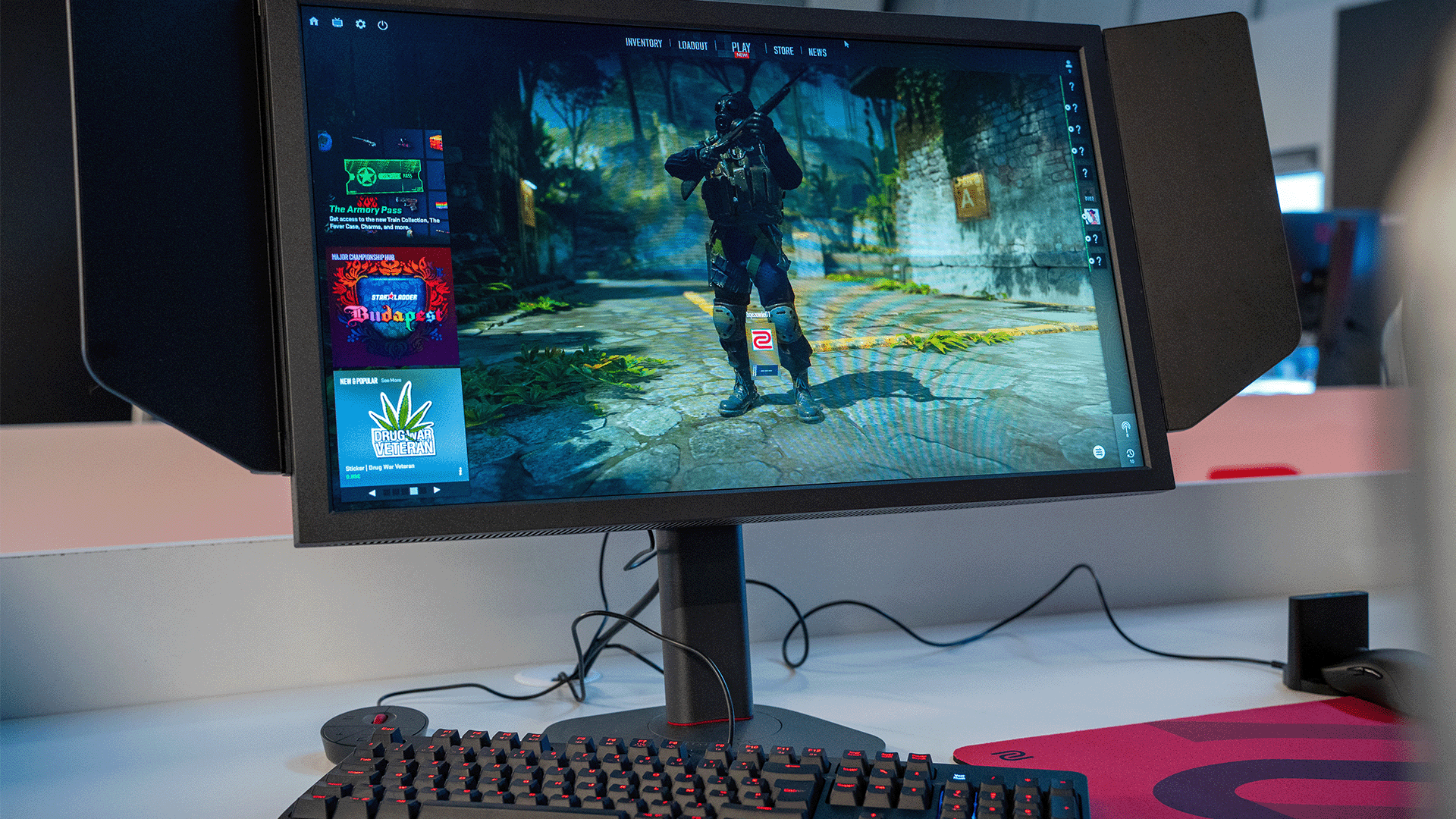
The side-shields added are to reduce distraction – for example the crowd, photographers or stage lights. And then we come to the very thick bezel around the monitor, which in 2025 does look dated, a fact BenQ and ZOWIE are well aware of.
“There’s a lot of haters online asking us about the bezel,” explained Celsa Wu. “Here is the answer. We’ve tested non-bezel type of monitors and they are easy to break.”
“Imagine you’re a professional player sitting on stage, you need to adjust your screen up and down to fit your personal preference. If there is no bezel to protect the monitor itself, the panel can easily break.
“It doesn’t look that clean, but actually the functional benefit is very important,” said Celsa Wu.
“That’s why you don’t see eye-catching RGB lights on our products, because we don’t think that will help people’s in-game performance.”
Celsa Wu, BenQ Europe’s Director of Esports Business
ZOWIE’s CS2 tournament presence and credibility
With close to 9 out of 10 CS2 players using ZOWIE monitors at home to practice and compete, it means ZOWIE hardware often features at events, even without being an official sponsor.
“So in most cases, for example with Starladder, PGL, or ESL, they come to us and give us a quote. If we can meet the conditions, of course it’s good,” said Celsa Wu.
“Sometimes we don’t have enough funding, and in those cases we will sell the monitors to them, because eventually they know that if they don’t put our monitors on stage, the pros will complain. That gives us a very good chance to have broader coverage.”
When ZOWIE does step in as an official sponsor, such as with the Starladder Budapest Major, they mean business.
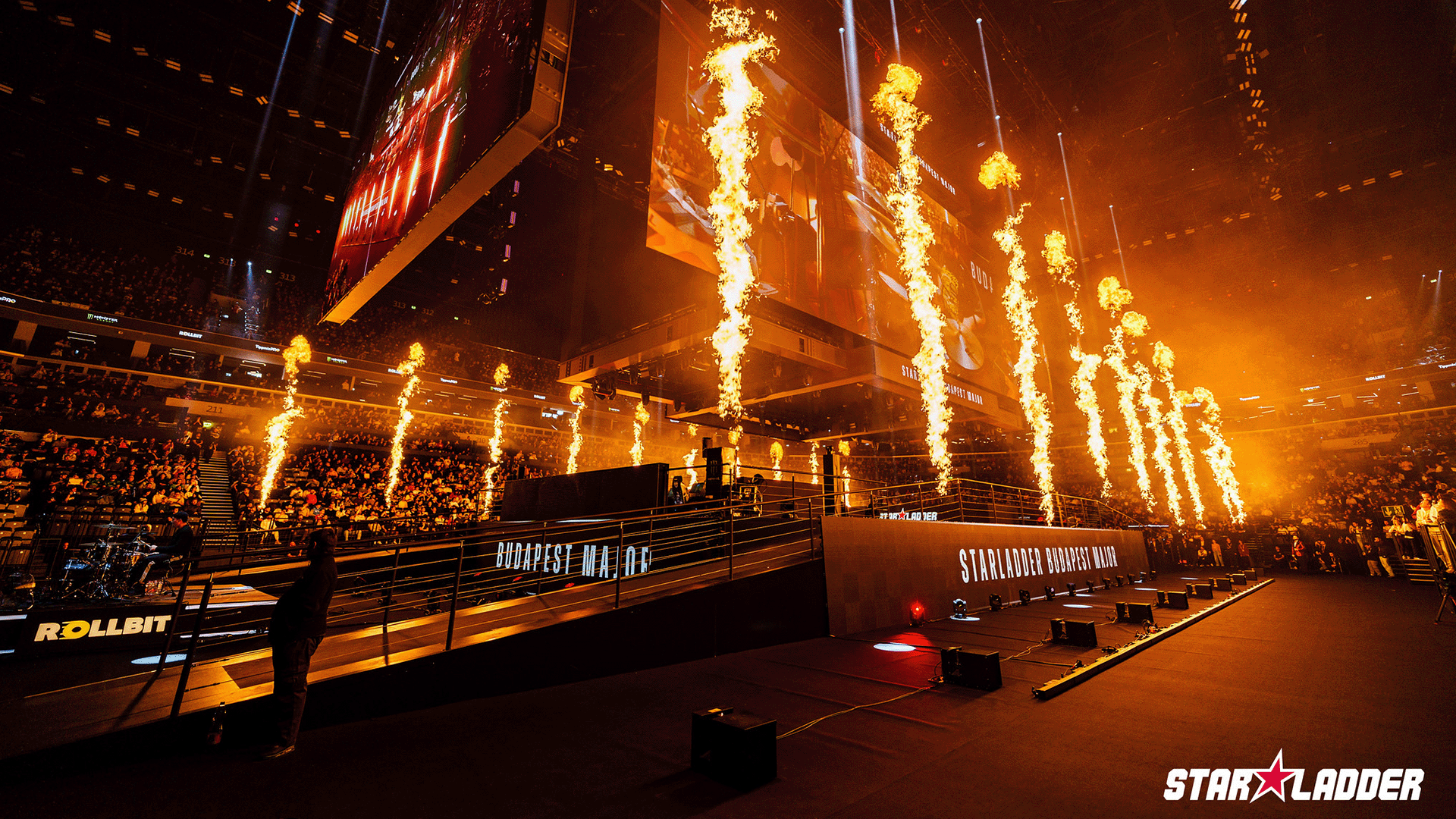
A surprising revelation from the ZOWIE Media Tour was that for the Starladder Budapest Major, not only did ZOWIE provide 180 XL2586X+ monitors (a $1,000 monitor at retail), they also flew out engineers to conduct a health check on every single monitor to ensure performance was consistent, including settings and firmware.
What is more, this is a service they’ve even offered to events where they are not the official sponsor but their monitors are still being used.
Why ZOWIE Is comfortable saying “No”
What stood out from the ZOWIE Media Tour wasn’t what the company announced, but what it deliberately chose not to. Rather than focusing on individual products or features, ZOWIE explained a consistent refusal to introduce change for its own sake.
No RGB lights, no bezel-less monitors, and no chasing visibility through memes or loud player hardware sponsorships. ZOWIE’s philosophy is minimalist: it treats esports hardware not as consumer electronics, but as competitive equipment.
ZOWIE believes earning trust is more valuable than novelty.
“We could make any kind of monitor, but not under ZOWIE’s name,” said Celsa Wu. “There are a lot of different offerings under BenQ, but if we want to call it ZOWIE, the process is more serious and more dedicated.”
In an industry where hardware developers have rapid cycles and constant upgrades, ZOWIE is happy to play the long game. For now, ZOWIE’s monitors in particular, remain the industry standard and their design philosophy is here to stay.
Disclaimer: esports.gg’s Lawrence “Malystryx” Phillips attended the ZOWIE Media Tour as one of 30 invited journalists via TARGET Esports Entertainment. Travel and accommodation were covered; however, editorial independence was fully maintained.