

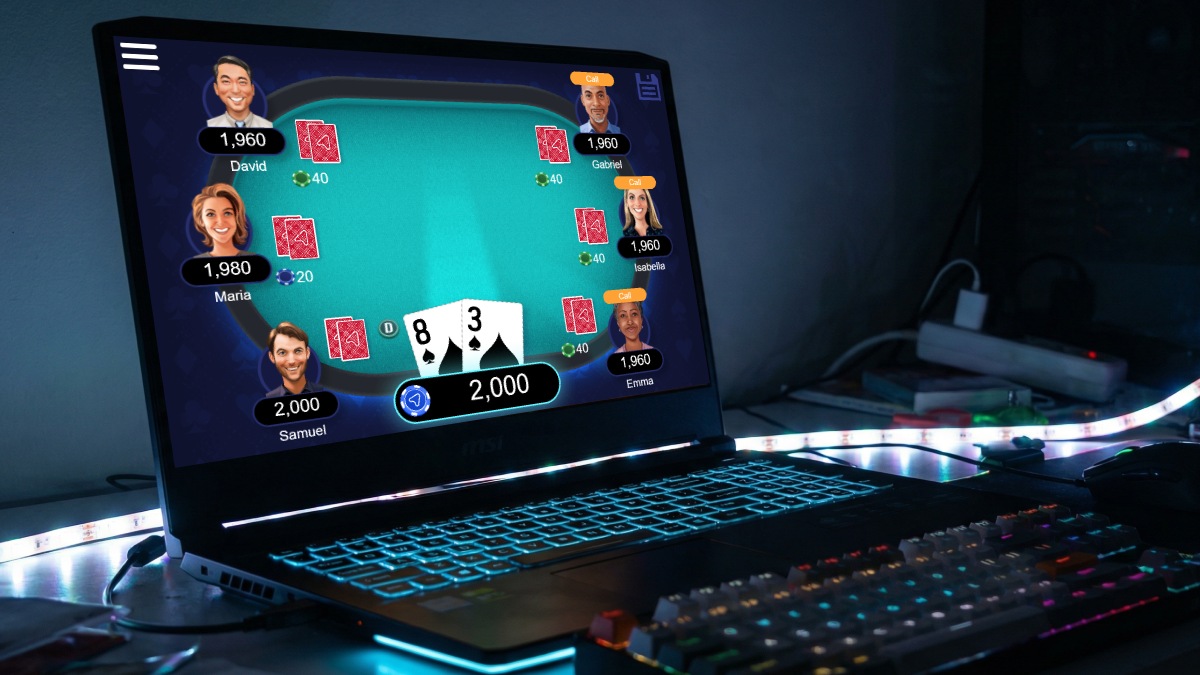
No Limit Texas Hold’Em strategy improves when decisions are reduced to repeatable rules: preflop ranges tied to position, bet sizes tied to equity thresholds, and line selection tied to range advantage.
The goal is fewer low-equity calls and clearer thresholds for when a bet is for value, protection, or fold equity.
Tournament rules also shape outcomes. Minimum-raise definitions and “short all-in” rules can remove re-raise options and force call-or-fold decisions, which changes how a hand should be planned.
How to Play No Limit Texas Hold’Em: Rules for Starters
No-limit means any wager can scale up to your full stack at any time. That freedom changes incentives. Small bets can invite calls that realize equity; larger bets can deny equity and pressure one-pair hands. Pot growth accelerates because bet size is uncapped.
Minimum raise rules define what legal aggression looks like. A common tournament standard sets the minimum raise as the size of the last full bet or raise.
- Example: blinds 1,000/2,000. An open to 5,000 creates a raise size of 3,000, so the next legal raise becomes at least 8,000 total.
WSOP Official Tournament Rules (2025), Rule 96, covers both points that affect planning. In no-limit and pot-limit, raises must be at least the size of the previous bet or raise on that betting round. An all-in wager that is less than a full raise does not reopen betting for a player who has already acted.
The WSOP rule set also includes an exception example where consecutive short all-ins can restore the option to raise, with the minimum raise tied to the last complete raise size.
Starting Hand Selection: Position-First Ranges
What is No Limit Texas Hold’Em if not a seat-by-seat game? Cards matter, yet position decides how often those cards get to realize equity. Starting hands gain or lose value based on where you sit. Early position asks for tighter ranges because more players remain to act; late position allows wider opens since information arrives first.
This baseline mirrors published preflop chart systems: the full-ring RFI defaults below sit in the same ballpark as charted opening maps for ~100bb play, then shift tighter or looser based on table 3-bet pressure. In practice, the early-seat and button percentages here track standard chart defaults closely enough to function as a reference baseline before making table-specific adjustments.
Exact mixes vary; the percentages below are a baseline RFI map that keeps early seats value-heavy and late seats steal-heavy at ~100bb.
Baseline open ranges (full ring, ~100bb)
- EP (UTG/UTG+1): ~12–15%
- MP: ~18–22%
- CO: ~26–32%
- BTN: ~35–45%
Hand class rules stay consistent in U.S. cardrooms. Pocket pairs scale well across seats; offsuit broadways lose value early; suited connectors want depth, usually 80 big blinds or more, because their value comes from strong draws and implied odds. Blind defense should tighten as open sizes increase, since a 3 big blind open offers a worse price than a 2–2.5 big blind open.
Preflop Aggression: 3-bets, 4-bets, and Folding Discipline
Preflop aggression does most of the work in No Limit Texas Hold’Em strategies, because it sets SPR and forces range decisions early.
- Value 3-bets target hands that dominate an opener’s range. Against a late-position open, hands like strong pairs and premium broadways perform well because they win large pots when called. A standard sizing is about 3x the open in position and 3.5–4x out of position; it builds the pot while keeping stack-to-pot ratio workable.
- Bluff 3-bets work best when blockers and sizing line up. Example (no ante, from the blinds): blinds 1bb/2bb, open 2.5bb, 3-bet 9bb; a fold wins 5.5bb (blinds + open), and risking about 8bb incremental yields a break-even fold rate near 62%.
- 4-bets and disciplined folds separate pressure from overreach. At 100 big blinds, 4-bets around 22–25 big blinds create immediate leverage, yet continuing without a clear plan forces low-SPR decisions with little room to pivot.
Pot Odds and Equity Without a Calculator
Pot odds answer one question: what share of the pot must be won for a call to break even. Use quick thresholds.
Facing a half-pot bet, the price is 1 to win 3 (you call 1 to win the pot after calling), so you need about 33% equity. Facing a two-thirds-pot bet, the price is 2 to win 5, so equity needed sits near 40%. A pot-size bet makes the price 1 to win 2, so the break-even point is 50%.
Equity estimates can stay simple. An open-ended straight draw after the flop has about 8 outs, which lands near 32% from flop to river. A flush draw has 9 outs, close to 36% from flop to river. One card to come changes the picture: on the turn, 9 outs have about 19–20% to hit on the river. Matching those numbers to the bet size tells you if the call makes sense without turning the table into a math exam.
Postflop Lines that Hold Up Under Pressure
High-stakes poker punishes uneven sizing, so a quick self-check helps. Use minimum defense frequency (MDF): MDF = pot ÷ (pot + bet). A 50% pot bet sets MDF near 67%, 66% pot sets MDF near 60%, and a pot-size bet sets MDF at 50%.
Those thresholds show why bigger bets need stronger value density, while small bets fit boards where many medium hands can continue without breaking your range.
- Flop continuation bets and checks work best when the board favors the preflop raiser. On dry boards, a 25–33% pot bet can pressure overcards cheaply. Coordinated boards push sizes toward 60–75%, since many continues sit near the 40%+ equity lines in the table below. Checks fit better on boards that favor the caller’s range.
- Turn decisions hinge on how the card shifts range advantage. A 70% turn bet asks a caller to continue with about 41% equity, filtering out weak pairs and thin draws. Checking protects medium-strength hands from facing raises that force folds.
- River choices follow pricing logic and range counts. Example (100bb): CO opens to 2.5bb, BTN calls, flop K♣7♦2♠ goes 33% c-bet and call, turn 4♠ goes 75% barrel and call. That line narrows BTN toward Kx, pocket pairs like 77–22, and spade/backdoor combos that continued twice; on a brick river, a half-pot bet needs about 33% folds, so value should be thick (AK, KQ, sets) and bluffs should come from missed spades or A5-type blockers, not random air.
Bet Size vs Equity Needed
Bet sizing sets the price your opponent gets to chase, and it sets your own break-even point when you call. The table below converts common bet sizes into a quick equity target. It works the same in cash games and tournaments; only stack depth changes how often players can apply pressure across streets.
| Bet Size Into Pot | Price (Call:Win) | Equity Needed |
| 25% pot | 1:5 | 17% |
| 33% pot | 1:4 | 20% |
| 50% pot | 1:3 | 33% |
| 66% pot | 2:5 | 40% |
| 75% pot | 3:7 | 43% |
| 100% pot | 1:2 | 50% |
One practical use: a flush draw on the turn has about 19–20% equity with 9 outs to come. A call facing 50% pot (33% needed) misses the mark without implied odds. That same call facing 25% pot (17% needed) can pass, since the price matches the draw more closely.
Stack Depth and Commitment Thresholds
Single-digit stacks change what “good postflop” even means, because fold equity becomes the primary lever and most lines compress into jam-or-fold decisions. WSOP’s official 2025 Main Event coverage notes Michael Mizrachi rebuilt after dropping to about 2.5 big blinds, which is the clearest public example of why sub-10bb play is about choosing spots to move all-in rather than trying to realize equity across streets.
Common Leaks That Hurt No Limit Results
Leaks show up in review when calls repeatedly miss their required equity (33% vs half-pot, 40% vs two-thirds), even if each decision “felt close.”
- Opening too wide up front. Early-position opens above 18% of hands invite tough calls and squeezes from behind, creating low-equity spots postflop.
- Calling 3-bets out of position without depth. At 60 big blinds or less, many suited connectors and weak broadways lose the implied odds they rely on.
- River over-calling. Calling a half-pot river bet requires being right about 33% of the time; many bluff-catchers fall short of that threshold.
- Sizing tells. Betting small only with draws or large only with value makes ranges easy to read after a few orbits.
- Overvaluing incentives. Poker bonuses tied to volume or leaderboard points can push players into marginal hands they would otherwise fold; if the bonus value is under 1–2 big blinds per 100 hands, treat it as a cutoff.
Cleaning up these areas shows up immediately in review: fewer calls that miss required equity (33% vs half-pot, 40% vs two-thirds) and fewer river bluff-catches that fail the price.
Strategies to Optimize No Limit Texas Hold’Em
Treat every street as a price-setting decision. Start with a preflop baseline that avoids thin early opens, then widen in late position when you can act last and apply pressure. Choose sizes that your range can support (use MDF as a check), and do not call unless the pot odds line up with your equity estimate.
When a bet crosses the half-stack point, assume future streets are close to forced and pick a line you can finish.
If gambling is a problem, call 1-800-GAMBLER.