

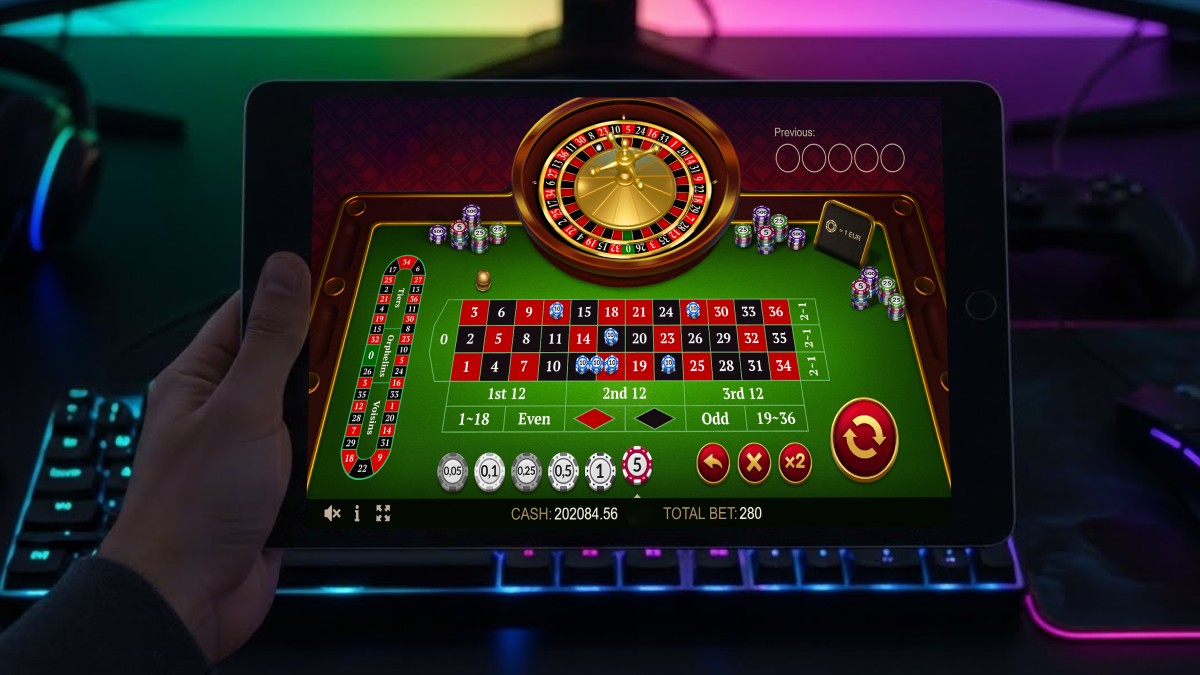
European roulette uses a single green zero on a 37-pocket wheel instead of the 0 and 00 setup on standard American tables.
That small structural change trims the house share—and over time, it drops from about 5.26 percent on an American wheel to roughly 2.70 percent on a standard single-zero layout.
What Is European Roulette?
A European wheel carries pockets numbered 0 through 36, plus a felt layout that lets players back single numbers or groups before the dealer closes betting.
The green zero breaks the symmetry between red and black, odd and even, and high and low, so every wager carries the same built-in 2.70 percent house edge when the standard 35 to 1 straight-up payout applies.
Inside bets on single numbers, splits, streets, and corners share the same 37-pocket base, while outside bets on dozens, columns, and even-money sections trade bigger hits for smoother swings across a session.
European Roulette Rules
European roulette tables in regulated US casinos and online roulette lobbies use a simple cycle:
- Players buy in with cash or account balance, receive color-coded chips, and place bets inside or outside the number grid until the dealer or interface closes the betting window.
- The dealer spins the wheel, calls “no more bets” as the ball slows.
- Dealer pays winning wagers and removes losing chips before the next round starts. Inside bets often allow smaller minimums, such as 1 dollar per chip, while outside bets like red or black may start around 5 dollars with separate maximums posted on the layout or limit board.
- Basic etiquette asks players to wait until payouts clear before reaching into busy areas and to keep drinks and phones away from the rail.
Reading a European Roulette Table
A European roulette table shows numbers 0 to 36 in a tight grid, with 0 set apart at the top of the inside layout. Single squares take straight-up bets and simple combinations such as splits, streets, and corners; the sequence does not copy the wheel, it is arranged so that dealers and players can reach common patterns quickly.
Outside the grid, even-money wagers such as red, black, odd, even, 1–18, and 19–36 usually sit closest to the rail, with separate boxes for dozens and columns that each cover 12 numbers. Many US rooms set higher minimums on these outside wagers, so a table that allows 1 dollar inside bets may require 5 dollar chips on red or black.
Some single-zero layouts also show a racetrack or call-bet panel. Standard groups include Voisins du Zéro, which covers 17 numbers around the zero (17 of 37 pockets, about a 45.9 percent hit rate), Tiers du Cylindre with 12 numbers on the opposite side of the wheel (about 32.4 percent), and Orphelins, an 8-number group that hits roughly 21.6 percent of spins.
These panels let players target wheel sections with a few chips instead of building every pattern on the main grid.
European Roulette Odds, Payouts, and Edge
Every spin on a European wheel selects one of 37 pockets. A straight-up wager on a single number hits 1 time in 37, about 2.70 percent; a split covering two numbers hits 2 times in 37, a little over 5 percent, and an even-money section, such as red or black, covers 18 of 37 pockets for roughly a 48.6 percent hit rate.
The posted European roulette house edge stays at 2.70 percent because the standard 35 to 1 payout on a single number and related paytable values do not quite match the true odds.
A simple sample shows how that gap works:
- A 10-dollar chip on a single number returns 350 dollars plus the stake when it lands, yet on average, it will miss 36 times in 37 spins.
- Over the long run, that pattern lines up with a 97.30 percent return to player on single-zero games, compared to about 94.74 percent on American wheels that use both 0 and 00.
These edge and RTP figures mirror those found in public rulesheets for Evolution and Playtech single-zero games and in regulator technical standards such as those used in New Jersey and Nevada.
Volatility sits on top of this edge rather than replacing it. A European wheel still carries the same 2.70 percent house share, whether a player uses inside bets that hit rarely and pay more or outside bets that land often and pay less; the choice mainly changes how rough the swings become from one session to the next.
Comparing Variants
| Variant | Pockets | House edge % | RTP % | Typical rule tweak | Short note |
|---|---|---|---|---|---|
| European roulette | 37 | 2.70 | 97.30 | Single zero | Standard single-zero layout. |
| American roulette | 38 | 5.26 | 94.74 | 0 and 00 | Extra double-zero pocket lifts the edge on every core bet. |
| French roulette with La Partage | 37 | ~1.35* | ~98.65 | La Partage on even-money bets | Half of even-money stakes returned when zero hits, cutting that edge. |
| Single-zero mini-wheel variant | 13 | ~2.70 | ~97.30 | Fewer numbers, same paytable | Compact wheel; same percentage edge, more frequent hits per session. |
| American 00 layout with 5-number top | 38 | 7.89 (top) | 92.11 | Special 0–00–1–2–3 bet | Top-line wager carries a higher edge than other bets on the same wheel. |
Figures in the table correspond to the Nevada Gaming Control Board Rules of Play for Approved Games, last updated in October 2025.
The 1.35 percent figure applies to even-money wagers with La Partage in force; other bets on the layout still sit near the standard 2.70 percent edge. Picking a 2.70 percent game over a 5.26 percent game trims the casino’s share on every spin and stretches a session budget across more rounds.
Online and Live Single-Zero Wheels
Regulated US platforms link layouts to game servers and live studios that publish rules, RNG testing, and European roulette payout data in advance under oversight from state regulators such as the New Jersey Division of Gaming Enforcement and the Nevada Gaming Control Board.
Single-zero wheels usually sit beside double-zero tables in the same lobby, so players can select the lower-edge option before they commit any stake. Live roulette streams from dedicated studios mirror physical tables, with real dealers and a typical pace of about 40 to 60 completed spins each hour.
Land-based pits follow similar patterns where state law allows table games. Many main floors still rely on double-zero layouts, while higher-limit or dedicated roulette areas are more likely to offer at least one single-zero table.
Limit boards and felt markings identify the wheel type clearly; once a player knows to look for a single green zero, table selection becomes the key decision instead of learning a different rulebook.
How to Win European Roulette: Tips and Tricks
Control exposure rather than chase patterns. A single-zero wheel cuts the edge compared to 0/00 tables, but long sequences of spins still rise and fall in ways no staking plan can fix, so limits on chip size and session length matter more than clever bet combinations.
- Treat stake size as a small slice of a session budget, such as 1 to 2 percent per spin, so a 200-dollar budget might pair with 2 to 4 dollar chips.
- Prefer single-zero layouts and La Partage rules where available, before thinking about inside combinations or special bets.
- Set a rough cap on total spins, for example, 60 to 100 rounds, and step away when that limit hits instead of chasing specific outcomes.
These habits do not change the 2.70 percent house edge, yet they define how long a bankroll is likely to last and how sharp the swings can become in a given visit.
European Roulette Betting Systems
Many guides present European roulette betting systems as a workaround for the house edge, yet every structured pattern still rests on the same 2.70 percent math.
Systems mainly change how fast stakes rise or fall during streaks, which matters on streamed tables and online sessions where spins resolve quickly.
- Martingale: step-ups double the stake after each loss on even-money bets. A line that starts at 2 dollars moves to 4, 8, 16, 32, and 64 dollars after five straight losses, with 126 dollars at risk to win 2 dollars on the next hit, and table or account limits often block the recovery step.
- Fibonacci progressions: increase more slowly, using 1, 1, 2, 3, 5, 8, and so on, which slows bet growth but still pushes wagers higher during drawdowns without changing long-run expectations.
- Flat betting: holds the stake steady, such as 3 or 5 dollars per round, so six losing spins cost 18 or 30 dollars instead of pushing exposure above 100 dollars; this steady line makes it easier to compare wheels and rule sets using the same chip size.
Bankroll Swing Ranges
A single-zero wheel softens the edge but leaves volatility in place. Inside bets on single numbers, splits, and streets create sharper swings because they hit less often and pay more, while wider outside bets such as red and black trade smaller wins for a steadier pattern of results.
A 200-dollar budget illustrates how stake size shapes risk on a 2.70 percent edge game. Expected loss per spin sits near 0.054 units, so a 2-dollar stake carries an average cost of around 11 cents per round, while a 10-dollar stake carries about 54 cents.
| Stake per spin | Approx spins before bust in a harsh run | Expected loss over 100 spins | Session notes |
|---|---|---|---|
| 2 dollars | About 100 | ~11 dollars | Longer sessions and softer drawdowns. |
| 5 dollars | About 40 | ~27 dollars | Mid-length sessions with noticeable swings. |
| 10 dollars | About 20 | ~54 dollars | Short sessions where losing streaks bite faster. |
This kind of estimate does not predict exact outcomes, but it helps players pick chip sizes and bet types that match their own tolerance for swings.
European Roulette: Entertainment in Single-Zero Wheels
Single-zero roulette keeps the same basic rhythm as American tables while cutting the house edge from roughly 5.26 percent to about 2.70 percent, and La Partage rules narrow that edge further on even-money bets.
Understanding how those 37 pockets drive odds and payouts lets players pick tables, stake sizes, and session lengths that match their risk comfort instead of chasing streaks or systems.
If gambling becomes hard to control, US players can contact the National Problem Gambling Helpline at 1-800-GAMBLER for free, confidential support.