

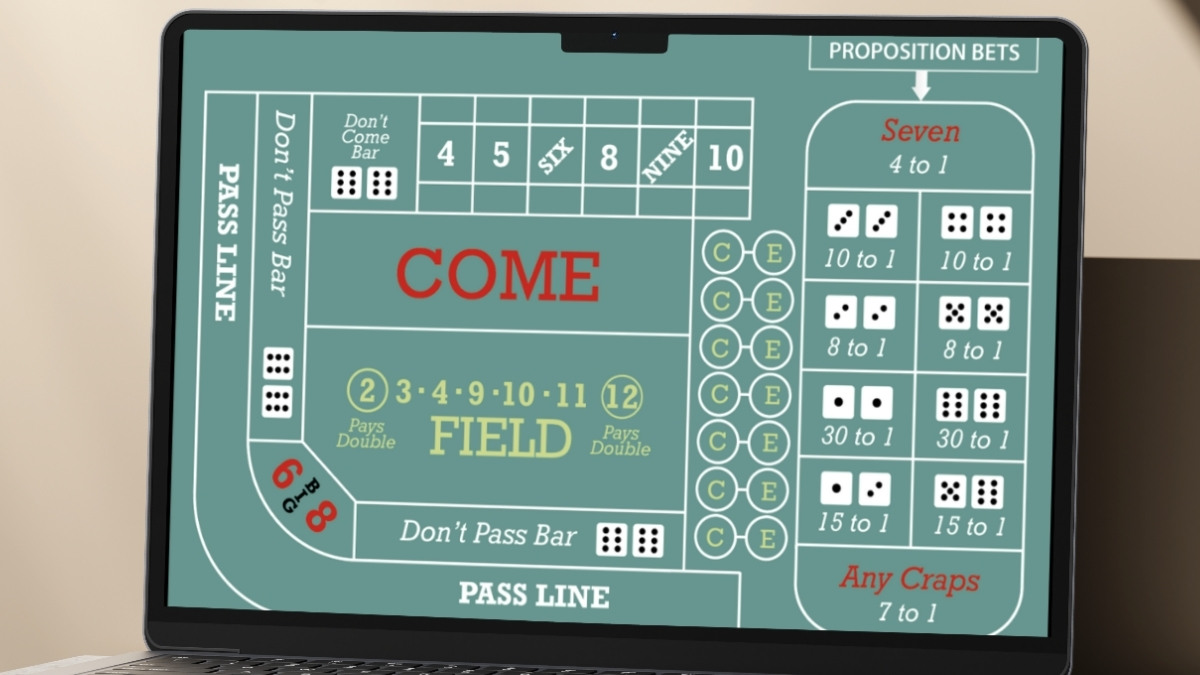
A craps table layout explained in precise detail shows how a single surface shapes the pace and structure of the entire game.
The table’s long build, mirrored betting zones, and coordinated crew positions create a layout built for speed, clarity, and controlled wagering. This framework lets players recognize where each bet belongs, how the dice move, and why the design remains one of the most recognizable formats in regulated environments.
The Craps Table Layout Explained
To read any craps layout quickly, players first need to see the entire casino craps table layout as a single, coordinated system.
A craps layout uses a long rectangular layout with mirrored ends, allowing players on both sides to place identical wagers and follow the same shooting rotation. The symmetry maintains handling consistency during crowded sessions.
Structure of a Mirrored Craps Layout
The surface shows identical Pass Line curves, Don’t Pass bars, Come and Don’t Come boxes, and numbered point areas at each end. Surrounding rails contain chip racks that separate wagering areas while giving the crew space to manage payouts.
Operators such as MGM Resorts use standardized craps table layouts across properties to support consistent training and dealer accuracy, thereby strengthening game integrity across high-volume floors.
A three-person crew surrounds the central portion. Two dealers stand on either side of the boxperson, who oversees chips, supervises payouts, and confirms bet placements. The stickperson stands opposite the box, directing the movement of the dice and coordinating proposition bets.
Gambling theorist Mason Malmuth once wrote that the structure “keeps the action visible and controlled,” a description that aligns with how the craps board is explained by its geometry, promoting orderly wagering and efficient dealer communication.
Why Crew Positioning Shapes Gameplay
The craps table diagram places dealer-controlled bets at the center and player-handled bets around the rail, giving each role clear boundaries.
The boxperson’s central view covers both ends of the table and the full set of betting zones. The stickperson’s reach across the proposition area keeps dice handling and one-roll bet management efficient.
This arrangement minimizes disputes, quickens chip handling, and supports higher wagering volume, which is why craps table layouts remain consistent even as digital platforms analyze efficiency trends.
Key Betting Zones on a Craps Layout
The craps layout organizes every wager into defined regions that define how players interact with both the dice and the crew. Each segment serves a specific purpose, from low-house-edge staples to dealer-managed bets that require precise handling.
Understanding how these zones operate within the craps table explained format builds a clearer view of how chips move and why specific bets sit where they do.
Pass Line and Don’t Pass Structure
The lower arc of the craps board layout holds the Pass Line, one of the most active zones on the table. Chips placed along this curve back the shooter during the come-out roll, and winning outcomes pay even money, winning on 7 or 11, approximately 22 percent of the time.
Directly above it is the Don’t Pass bar, supporting wagers against the shooter. Both areas show straightforward placement rules, and their visibility is what anchors both ends of the casino craps table layout.
Next to these sit the Come and Don’t Come boxes, which mirror the Pass and Don’t Pass mechanics once a point is established. Odds bets, one of the few wagers with no house edge attached, sit behind these primary chips in clearly marked spaces along the rail.
These odds sections form part of the craps table layout with odds, giving players a way to increase exposure without disrupting dealer workflow. The table below shows an overview of core betting options as they appear across typical craps table layouts.
| Bet Type | House Edge | Typical Payout | Volatility Tier |
| Pass Line | 1.41% | 1:1 | Moderate |
| Don’t Pass | 1.36% | 1:1 | Moderate |
| Come | 1.41% | 1:1 | Moderate |
| Don’t Come | 1.36% | 1:1 | Moderate |
| Field | Varies | 1:1 or 2:1 | High |
| Place 6 or 8 | 1.52% | 7:6 | Low |
| Any Craps | ~11.1% | 7:1 | Very High |
Field, Place, and Center Access Points
The Field spans a marked rectangle near the middle arc, offering payouts on multiple totals, including 2 and 12, which return higher rewards on many casino floors. Because these totals carry low probabilities, the space often attracts fast-paced bets from experienced players who follow probability charts.
For example, the odds of rolling a 12 sit at 1 in 36. A $10 wager on 12 in the Field that pays 2-to-1 would return a total of $30. Although the math is straightforward, the placement rules keep the zone organized during heavy activity.
Place bets sit above the Come area and let players select specific point numbers. These bets belong to the dealer and, because 6 and 8 appear in 5 of 36 outcomes, they are resolved often enough to demand precise placement. Their clear alignment with the point boxes creates logical payout pathways and fast collection when numbers resolve.
This design mirrors the consistency found in regulated platforms. These betting spaces keep chips moving smoothly for dealers and players.
Inside the Proposition Area on a Craps Board
The center portion of a craps table layout houses the one-roll wagers that influence the game’s momentum. These bets sit in a compact zone that the stickperson manages, creating a distinct cluster of symbols distinct from the outer sections of the craps board, as explained through structured placement.
How the Center Section Organizes High-Impact Wagers
Most casinos use a 12-foot table because the geometry minimizes dealer reach errors; the proposition area lies between the mirrored halves of the craps layout, offering wagers such as Hardways, Any Seven, Any Craps, and specific single-roll totals.
Because these bets carry higher house edges, such as roughly 11 percent on Any Craps paying 7:1, casinos isolate them so the stickperson can oversee chip placement and quickly collect resolved wagers (thus reducing mispays on one-roll bets). The layout keeps these symbols visible, so dealers can resolve fast outcomes in one motion.
Designating this area as dealer-controlled removes crowding from the rail and reduces misalignment during busy sessions. The stickperson calls each bet verbally, handles payouts, and pulls losing chips from the board with consistent movements.
This workflow supports the game’s pace and prevents delays that might occur if players attempted to self-place these wagers. The fast rhythm in the center aligns with craps table layouts, which use defined sections to manage varied risk levels across a single surface.
A recent data point from the American Gaming Association reported that U.S. commercial casinos generated a record $66.5 billion in gaming revenue in 2023, with table games, including craps, contributing significantly to rising engagement heading into 2025.
Why Proposition Bets Influence Game Tempo
Positioning high volatility bets in a compact middle box lets dealers control sequences that resolve quickly.
Hardways rely on exact dice combinations, which occur in 1 of 36 outcomes for each, and Any Craps wagers resolve immediately, which requires instant chip handling. Because these bets settle in one roll, the center area acts as a stabilizer for the game’s tempo, allowing the outer zones to maintain slower resolution cycles without interfering with rapid outcomes.
This division helps players read table rhythm, spotting when the center is driving short-roll, high-volatility action. A busy center often signals aggressive betting or short-roll patterns, while a quieter center reflects slower cycles around point numbers.
Platforms that analyze operator structures, from fiat to crypto betting (including BTC and ETH gambling sites), reference craps table layouts because the proposition area showcases how a compact geometry can support high engagement without disrupting the broader flow.
Game Flow Supported by a Structured Craps Layout
Craps pace depends on coordinated movement across the numbered boxes, chip racks, and outer rails. A craps table diagram reinforces this by guiding shooter actions, dealer responsibilities, and chip-handling paths that keep each round moving steadily.
How Numbered Boxes and Chip Racks Maintain Order
The numbered point boxes sit across the upper portion of the craps board layout, forming the visual roadmap for each round once a point is set. These boxes allow dealers to track outcomes clearly, set odds on primary chips, and confirm payouts without interrupting the shooter.
Due to the fact that these spaces align with both ends of the casino craps table, they help maintain symmetry during crowded sessions.
Chip racks and padded rails create defined boundaries that separate active wagering spaces from storage areas. Dealers use the aligned chip racks to segment denominations, organize payouts, and keep transactions transparent.
These dividers keep chips from mixing and support clear lanes for dealer movement, especially during rolls where multiple bets resolve simultaneously.
How Shooter Positioning Shapes Dice Movement
Shooter placement also follows the craps table explained structure. Players rotate through positions along the rail, and dice must travel the full length of the table before striking the back wall. This rule protects fairness and ensures that the dice move through the same physical path each round.
The stickperson coordinates dice retrieval and distribution, using the center zone to pass the pair to the next shooter when the rotation advances.
This movement has been documented at many Las Vegas properties, including a report from The Nevada Independent describing how Resorts World adapted its table game procedures during peak tourism periods, noting craps crews relied on efficient layouts to manage movement and keep sessions running smoothly.
The example shows how structured table designs not only reinforce game integrity but also support high-volume traffic without hindering casino operations.
Understanding a Full Craps Table Layout
A view of a craps table layout shows how structure, betting zones, and crew coordination support a controlled game. Each section creates clear wagering paths that sustain fairness across live and digital settings.
Strong table awareness helps players place chips correctly, spot low-house-edge bets, and avoid high-volatility center wagers. Recognizing how each component interacts within the layout builds confidence at any casino.
Please play responsibly. 21+, T&Cs apply.